
For teams using SFTP To Go for secure file transfer and Google Drive for everyday file access, syncing the two can reduce manual uploads, downloads, and folder checks.
SFTP To Go gives teams managed SFTP, FTPS, HTTPS web portal access, and S3-backed storage. Google Drive gives teams browser-based file access, sharing, and collaboration. MultCloud connects the two so selected folders can move between secure file transfer workflows and a familiar cloud workspace.
This is useful when vendors, partners, applications, or internal systems need SFTP or FTPS, while team members need files available in Google Drive for review, backup, or collaboration.
If you’re deciding whether file sync, direct API work, or a hybrid model makes more sense, see our guide to API vs SFTP integration.
Why sync SFTP To Go with Google Drive?
A Google Drive SFTP sync makes sense when one environment handles secure file exchange and another handles team access, backup, or review.
Common workflows include:
- Backing up SFTP files to Google Drive
- Moving Google Drive files into an SFTP workflow
- Making partner files available for internal review
- Keeping selected folders updated across both services
- Reducing manual file movement
- Supporting recurring file delivery or backup tasks
This setup does not replace access planning, retention rules, data ownership decisions, or compliance review. It connects two file environments when that workflow makes operational sense.
For a wider view of secure file movement, storage, access controls, audit records, and automation, see what MFT is and how managed file transfer works.
Let's take a closer look at the benefits of syncing Google Drive with SFTP.
Use SFTP/FTPS sync with Google Drive
Google Drive doesn't natively work as an SFTP server.
SFTP To Go provides managed SFTP and FTPS access. MultCloud can then connect that SFTP To Go environment to Google Drive, which helps when a partner, vendor, system, or internal process requires SFTP or FTPS, but the team still needs selected files available in Drive.
For current secure transfer context, see what SFTP is and when to use it, why SFTP is still relevant, and when FTPS still makes sense.
Support backup, review, and collaboration
A sync between SFTP To Go and Google Drive can help teams keep selected files available in more than one approved place.
A vendor file might arrive through SFTP To Go and sync into Google Drive for internal review. A team might prepare files in Google Drive and sync them to SFTP To Go for partner pickup. A recurring export might move into Drive for backup or reporting access.
The important point is control.
Not every folder needs to sync. Not every file should move into a collaboration space. Before setting up the sync, decide which folders belong in the workflow, who should access them, and whether the files are allowed to move into Google Drive under your internal rules.
If the workflow involves regulated files, vendor folders, audit records, or access review, see cloud MFT for regulated industries and secure file transfer automation for regulated workflows.
Reduce manual file movement
Manual file movement creates delays, missed files, duplicate copies, and avoidable mistakes.
A sync between SFTP To Go and Google Drive can move files on a schedule, in one direction, or in both directions, depending on the MultCloud settings you choose.
This can support:
- Scheduled backups
- Partner file pickup
- Internal review folders
- Recurring report delivery
- Cloud-to-cloud file movement
- Operational file archiving
For broader workflow planning, see SFTP automation and SFTP SaaS vs hosted SFTP.
MultCloud: Your gateway to SFTP Google Drive Sync
MultCloud is a third-party cloud management service that connects different storage platforms and lets users create transfer or sync tasks between them.
In this workflow, MultCloud connects your SFTP To Go account and your Google Drive account so files can move between the two services according to the sync mode you choose.
SFTP To Go’s native file automations can handle file-level processes such as moving, copying, deleting, or PGP encrypting and decrypting files within the managed file environment. When the workflow needs to move files into an external system such as Google Drive, an integration service like MultCloud handles that connection.
This helps when you want SFTP or FTPS file workflows to connect with Google Drive without writing scripts or managing a custom connector.
Before using any third-party sync service, check your internal security, privacy, vendor review, and compliance requirements. MultCloud needs authorized access to the accounts you connect, so the workflow should match your organization’s data handling rules.
If you’re comparing managed transfer options before building a sync workflow, see managed file transfer platforms for 2026 and GoAnywhere MFT alternatives.
Why MultCloud works for this sync
- Intuitive setup: MultCloud provides a browser-based interface for adding cloud services and creating sync tasks, so users do not need to build a custom integration.
- Cloud service support: MultCloud supports many storage services, which helps when Google Drive is one part of a wider file workflow.
- Sync options: MultCloud supports one-way sync, two-way sync, scheduled sync, and real-time sync options. The right choice depends on whether the workflow is backup, delivery, collaboration, or folder mirroring.
- Sync visibility: MultCloud provides synchronization status, transfer details, retry behavior, and error information, which helps users confirm whether files moved as expected.
If users need a desktop or local file transfer option instead of cloud-to-cloud sync, see our comparison of SFTP clients for 2026.
How to make it happen: Google Drive SFTP Sync with Multcloud
Getting started with MultCloud follows four main steps:
- Step 1: Sign up and log in
- Step 2: Add your clouds
- Step 3: Craft your sync
- Step 4: Launch your sync
Step 1: Sign up and log in
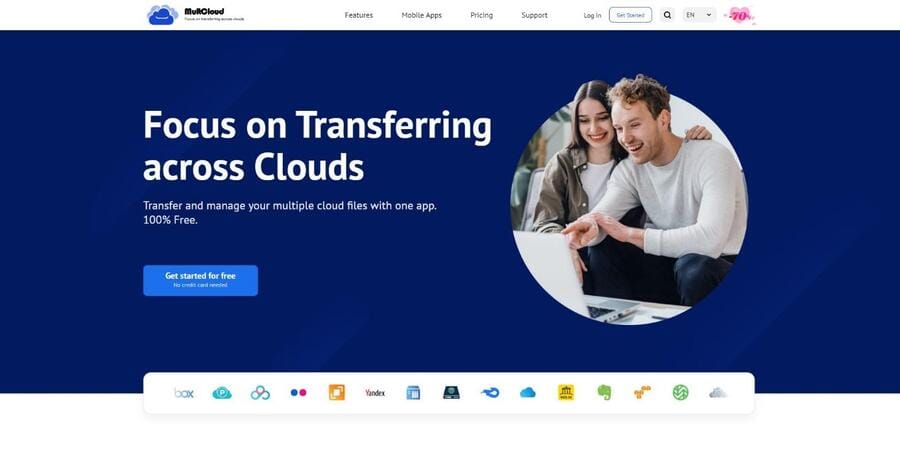
Before you can begin orchestrating the seamless movement of your files across the digital cloud, you must create your own MultCloud account.
Navigate to MultCloud: Open your web browser and visit the MultCloud website.
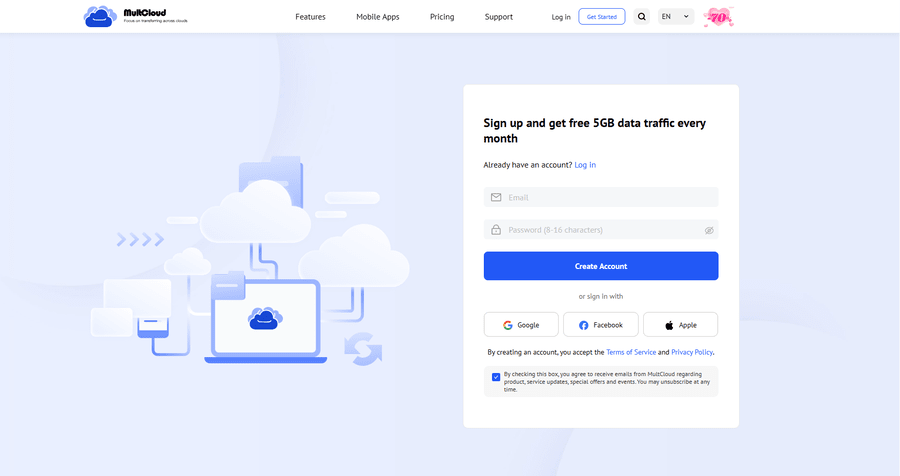
Choose how to sign up: MultCloud offers several different sign-up methods. Choose between email and password, Google, Facebook, or Apple ID sign up options to get started.
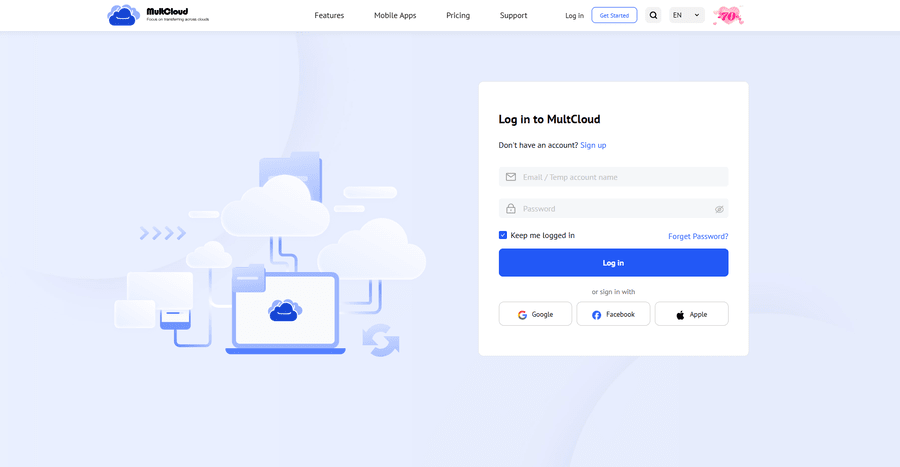
Log in to your new account: Head to the MultCloud homepage and click Log In. Enter your credentials or choose your Google account to log in.
After login, you’ll find yourself at MultCloud's dashboard. This is where all your cloud-managing actions will take place.
Step 2: Add your clouds
Take a moment to familiarize yourself with the layout. You’ll notice options to add cloud services, create sync tasks, and more. Keep in mind that this is your command center for all things cloud storage.
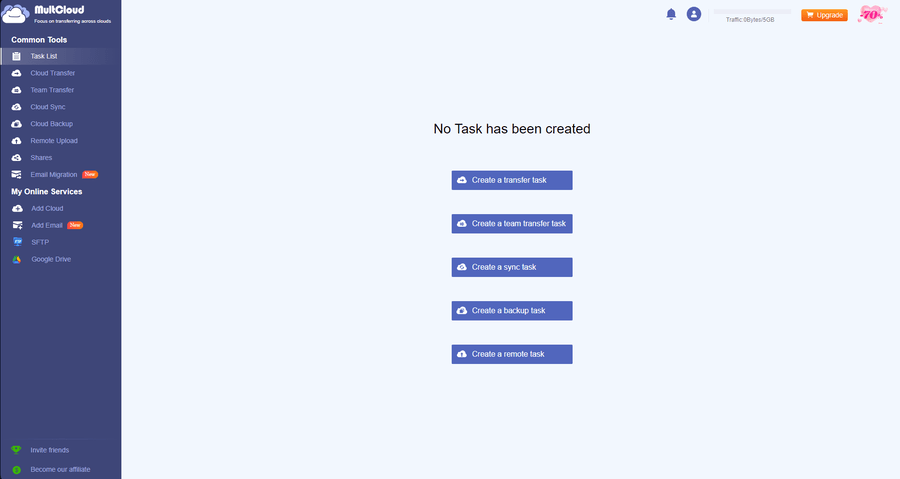
SFTP To Go:
SFTP To Go offers a mission control for data. It's where secure storage meets easy transfers and unlimited automation and integration options. Picture all your files, neatly stored and encrypted, just a few clicks away from where they need to go.
To add it:
Click Add Cloud and scroll until you see the FTP option.
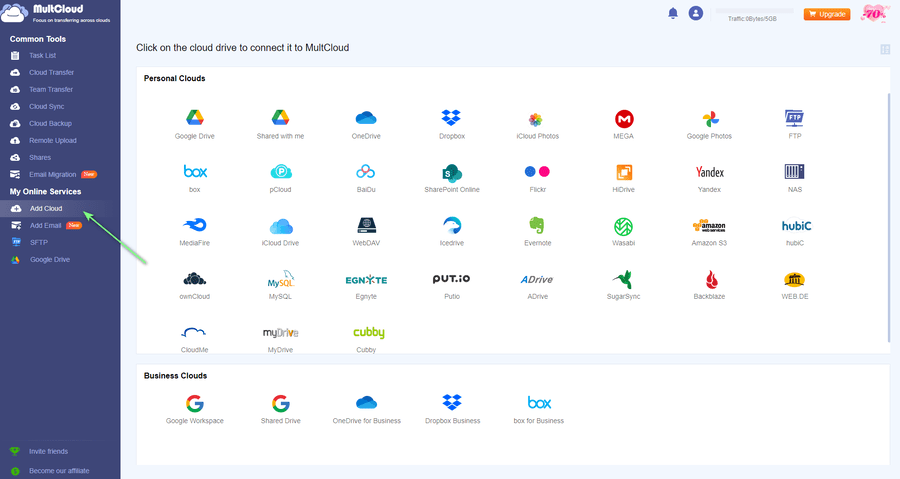
Select FTP to bring up a dialogue box where you will input your SFTP To Go details host, username, and password. To learn more about accessing your SFTP To Go details and credentials, Read This.
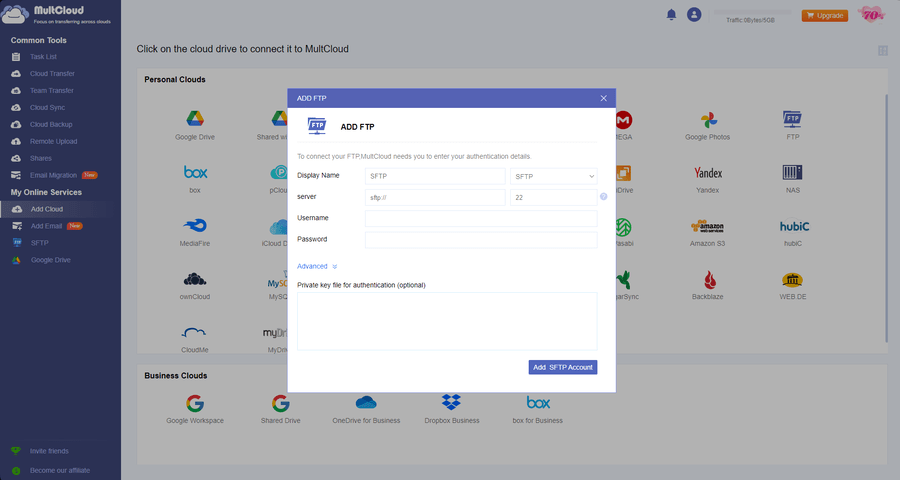
After filling in your details, hit the Add SFTP Account button. MultCloud will work magic to establish a secure connection to your SFTP To Go.
Google Drive:
Google Drive, like SFTP To Go, lets you access files from anywhere, share with anyone, and collaborate in real time, albeit without the more advanced benefits of SFTP To Go. Luckily, this sync will give you the best of both worlds.
To add it:
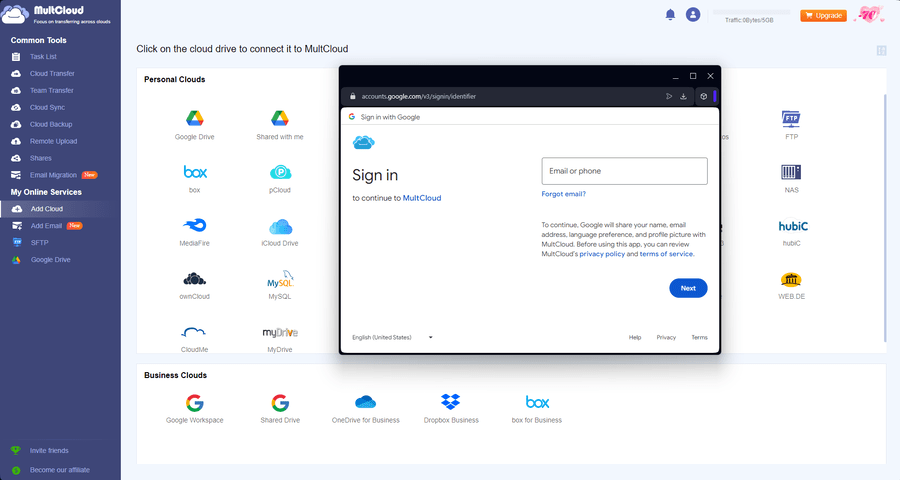
In the Add Cloud section, Google Drive is just a few scrolls away. Select it to initiate the addition process.
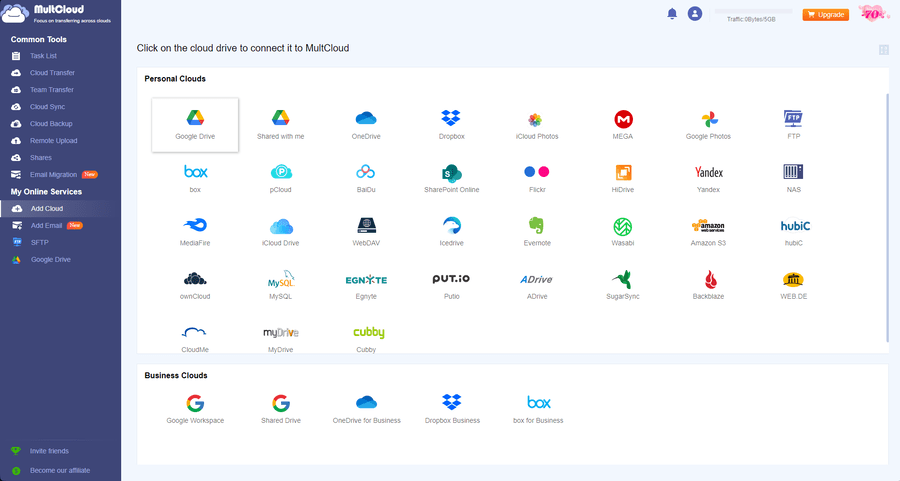
A window will open to log into your Google account and authorize MultCloud. This step is like telling Google that MultCloud can access your Drive without compromising your data's security.
Step 3: Crafting your sync
After adding your SFTP To Go and Google Drive accounts to MultCloud, it’s time to define the nature of your sync.
Selecting Source and Destination
Navigate to Cloud Sync: On the MultCloud dashboard, find and click on the Cloud Sync tab. This is your control room for creating sync tasks.
We’ve illustrated the process for syncing from SFTP To Go below, but it’s important to note that the same process will apply whether you’re syncing files to or from SFTP To Go (or to or from Google Drive), so simply click the option you prefer.
Choose your source: Click the first box labeled From and select your SFTP To Go account. This is where your files are currently stored and waiting to be synchronized. You will see your SFTP directories; choose the one you wish to sync or specific files within it.
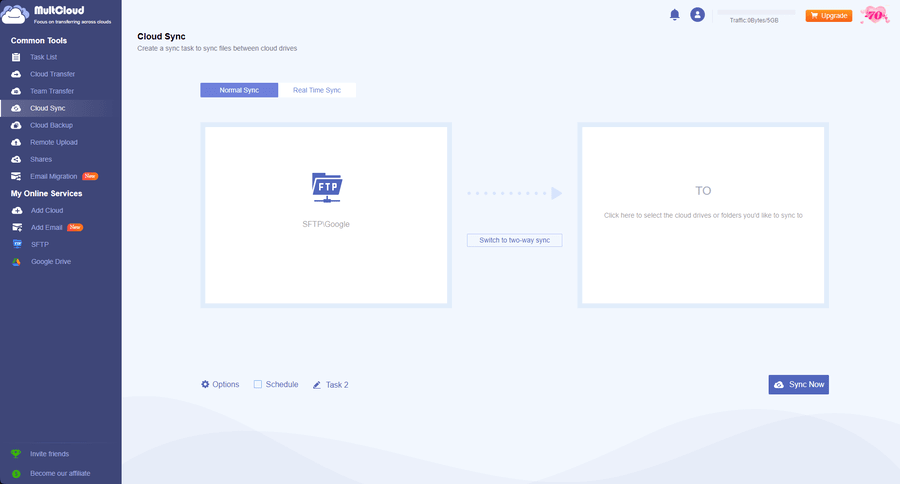
Select your destination: Now, click on the second box labeled To and choose your Google Drive account. This is where your files will land. If you have a specific folder in Google Drive where you want these files to go, navigate and select it. If not, you can create a new folder on the spot.
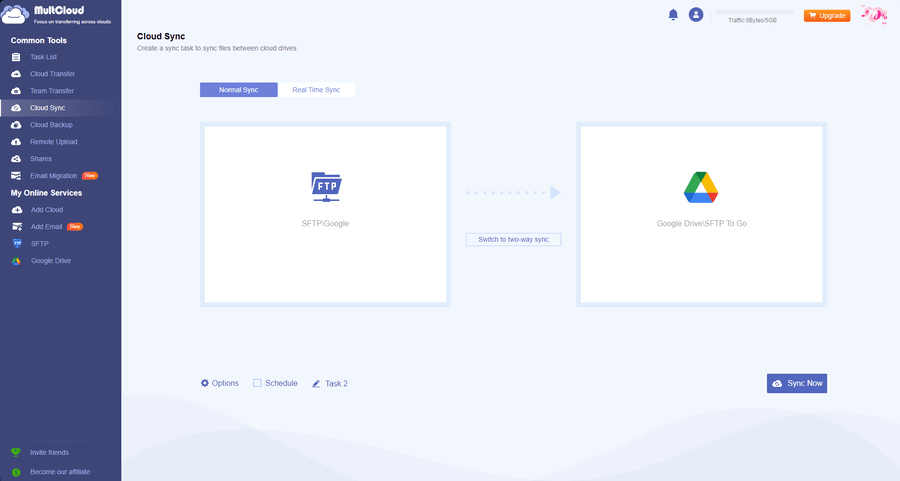
You’ll also note that between the “from” and “to” boxes, there is a button to switch to two-way sync. This may be the suitable option, depending on your needs. If so, just click the button and follow the prompts.
Defining sync mode
MultCloud offers tailored sync modes to match your specific needs. Understanding these will help you choose the best fit.
You can select real-time sync, perfect for critical files that need to be updated instantly across platforms. Any change in your SFTP directory will be reflected in Google Drive immediately and automatically.
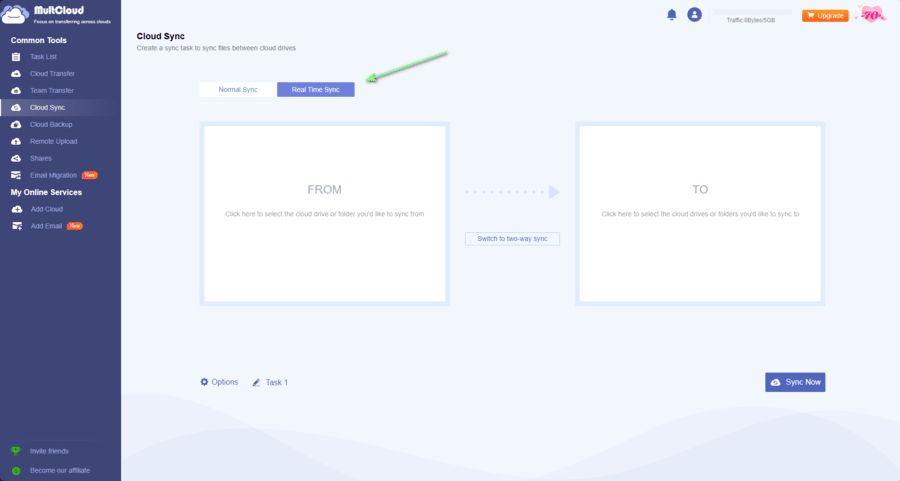
Another choice is normal sync, where you can set specific times of the day for a sync to trigger. This mode syncs only the new or changed files since the last sync, saving time and bandwidth.
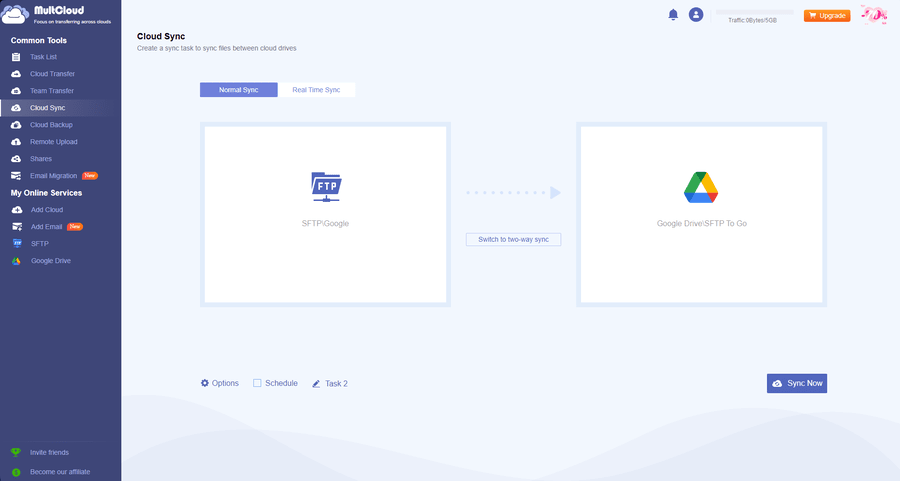
Choosing the sync option: Based on your needs, pick a sync type from the options provided. This choice significantly influences how your files move and are managed between your SFTP To Go and Google Drive.
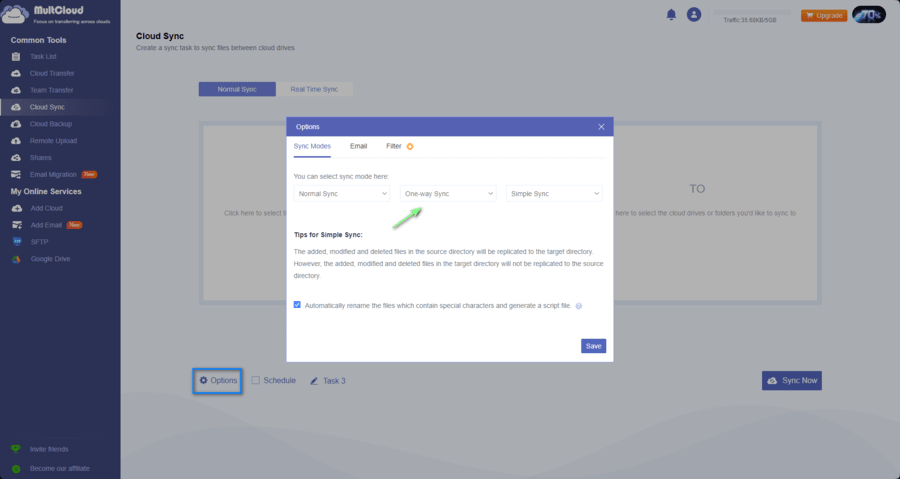
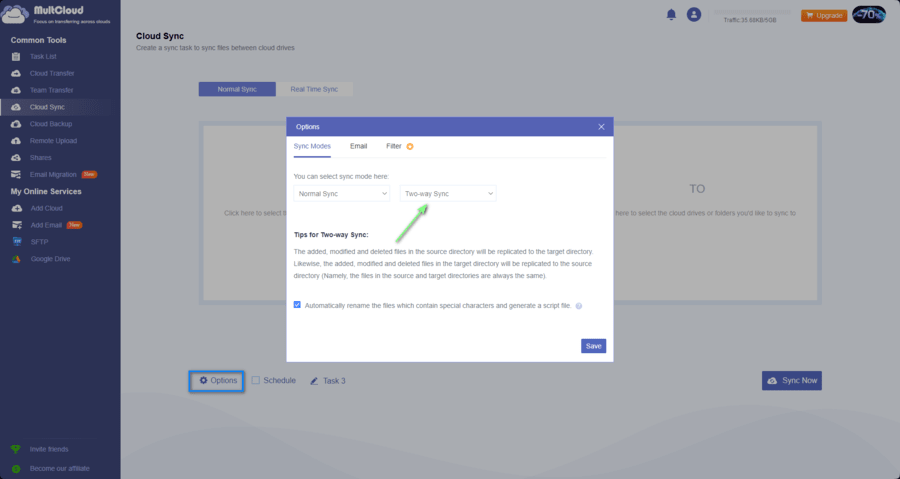
Before you launch your sync, you must consider two primary options: One-way Sync and Two-Way Sync. Each serves a different purpose and can be tailored to fit your specific file management strategy.
- One-way Sync: The go-to option for updates to travel in a single direction from your SFTP server to Google Drive. It's ideal for backup scenarios where changes in the source directory are replicated to the target but not vice versa. To enable this option, click the Options button to select One-way Sync.
- Two-Way Sync: This option ensures that your SFTP server and Google Drive mirror each other perfectly. It's the sync option of choice for collaborative environments where files are constantly being updated in both locations. Choose Two-Way Sync from the sync Options in MultCloud.
Both sync options offer automation, consistency, and control over how your files are managed across different services. They can also be customized to fit your workflow.
Step 4: Launch your sync
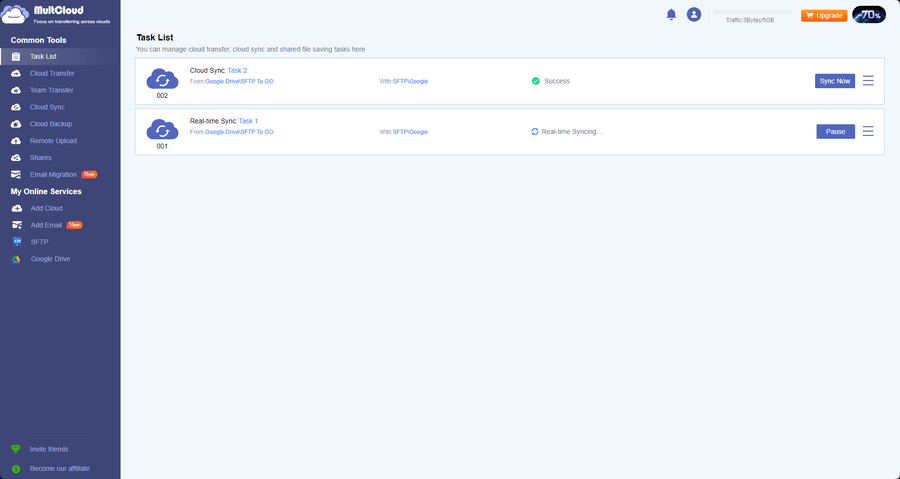
With everything in place, hit Sync Now.
MultCloud will then gracefully carry your files across the digital divide from the secure confines of SFTP To Go directly into Google Drive—or the other way around—or both, depending on which options you’ve chosen.
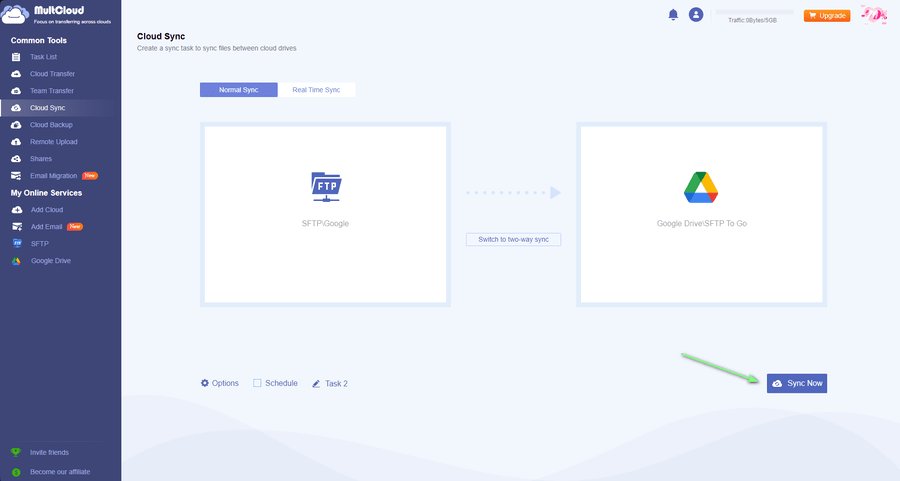
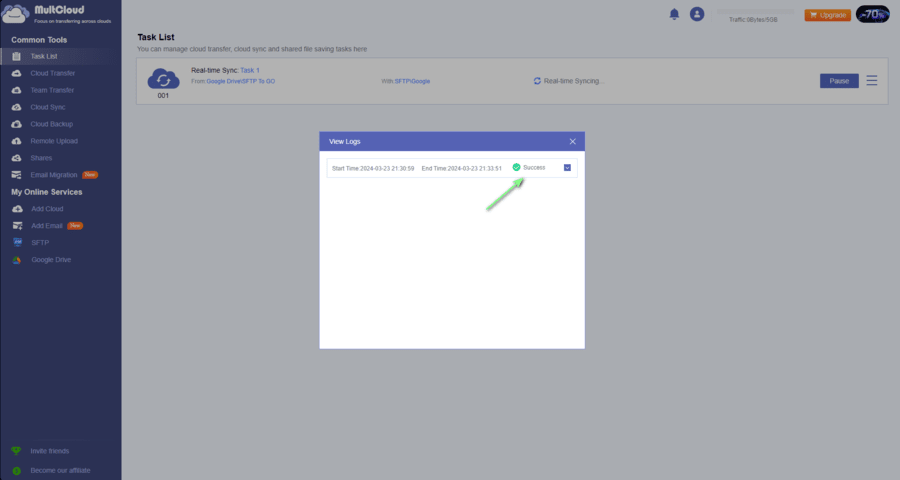
MultCloud offers detailed stats for every synchronization operation, providing information on the amount of data transferred, as well as the number of files affected.
In the event of a synchronization failure, MultCloud automatically attempts to retry the operation. Additionally, detailed error logs are available to help diagnose and resolve any issues.
In conclusion
Pairing SFTP To Go with Google Drive streamlines data handling, combining solid security and easy cloud access. This setup boosts teamwork with quick file syncs and cuts down on routine tasks through smart automation.
SFTP To Go adds a layer of encryption, keeping data safe both in transit and stored. Opting for this integration offers a practical, secure way to manage data, blending SFTP To Go's robust protection with Google Drive's convenience. Explore SFTP automation to reduce human error and streamline workflows.
What’s more, the process for integrating SFTP To Go with Google Drive is refreshingly simple, thanks to the innovation of Multcloud.
Frequently asked questions
Can Google Drive connect directly to SFTP?
Google Drive does not natively work as an SFTP server. To sync Google Drive with SFTP, you usually need a connector, integration platform, cloud sync service, or custom workflow. In this guide, MultCloud connects Google Drive with SFTP To Go.
Is SFTP Google Drive sync secure?
The sync can support secure file movement when it is configured correctly, but security depends on the full setup. Review SFTP credentials, Google Drive permissions, MultCloud access, folder selection, sync direction, and internal data handling rules before moving sensitive files.
Can I select specific files or folders for syncing?
Yes. MultCloud lets you choose the source and destination folders for a sync task. This means you can sync selected SFTP To Go folders with selected Google Drive folders instead of syncing everything.
Can I sync from Google Drive to SFTP?
Yes. You can use MultCloud to sync files from Google Drive to SFTP To Go, from SFTP To Go to Google Drive, or in both directions. The right setup depends on whether you need backup, delivery, collaboration, or two-way folder mirroring.
Will deleting a file on my SFTP server remove it from Google Drive?
That depends on the sync mode and deletion settings you choose in MultCloud. Before using two-way sync or deletion syncing, test the behavior with non-critical files so you understand how deletions are handled.
What is the best way to use SFTP To Go with Google Drive?
The best setup depends on the workflow. Many teams use one-way sync for backups or file delivery, while two-way sync may suit collaborative folders that need to stay aligned. For sensitive files, use narrow folder access, separate credentials, and approved Google Drive permissions.